

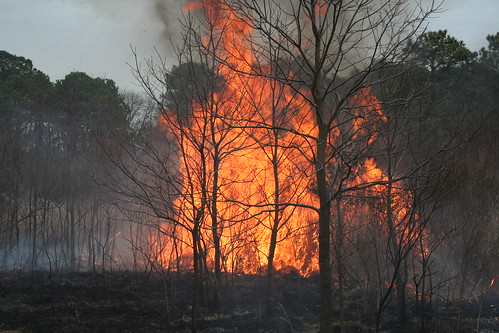
Maryland Department of Natural Resources photo
The number of wildfires in Maryland in 2025 remained steady but total acres burned nearly doubled, largely due to arson, according to the Maryland Forest Service’s Annual Wildland Fire Report. The report covers wildfires across 3.2 million acres of land overseen by the Maryland Forest Service.
In Maryland, 172 wildland fires burned 8,167 acres during 2025. In 2024,164 wildfires burned approximately 953 acres. Compared to the 5-year average, 2025 saw 13% more wildfires and 126% more acres burned. The busiest month was March, when wildfires were double the five-year average.
“March 2025 was characterized by a continuation of exceptionally warm conditions, contributing to a record-setting warm period nationally,” said Chris Robertson, Maryland Forest Service state fire supervisor. “Maryland experienced generally above-average temperatures following a very warm, dry winter pattern, falling within an exceptionally warm 12-month period for the region.”
The most common cause of wildfire in Maryland is debris burning, but in 2025, arson accounted for the most acres burned. Debris burning caused 74 wildfires resulting in about 152 acres of damage, while arson caused 19 wildfires and 6,612 acres of damage, primarily in Dorchester County during February and March. The number of fires started by arson was significantly lower than in 2024, when 33 fires occurred, but dry conditions greatly increased acres burned.
Prevention and Preparedness
The Maryland Department of Natural Resources reminds residents that they can help prevent wildfires by composting rather than burning leaves or other yard debris, ensuring that camp or backyard fires are properly extinguished, and educating children about the dangers of lighters, matches, and wildfires.
Residents whose properties may be at risk of wildfires can use “Firewise” techniques to keep their homes and other buildings safe from wildfire. These techniques include clearing flammable material away from structures, using fire-resistant building materials when possible, and maintaining a 30-foot cleared buffer around your home.
The Maryland Forest Service is also expanding its use of prescribed burns to reduce wildfire risk on land susceptible to fire. In 2025, Maryland Forest Service and partner organizations conducted 150 prescribed burns covering approximately 7,417 acres.
Prescribed burns, also called controlled burns, have become an increasingly common strategy for land management and wildfire prevention. Large wildfires are less common in Maryland than in western states, but the prescribed burns help reduce the dead woody debris and shrub layer that could serve as fuel for unintended fires.
Larger trees that are fire-adapted with thicker bark and resprouting ability, such as oaks, withstand ground-level fires. The bare mineral soil left behind by prescribed burns can stimulate successful regeneration from the seed bank. The burns can also help create successional habitat composed of grasses, shrubs, and other low-lying vegetation that provide new habitat for wildlife such as pollinators and ground-nesting birds, including quail and field sparrows.
